

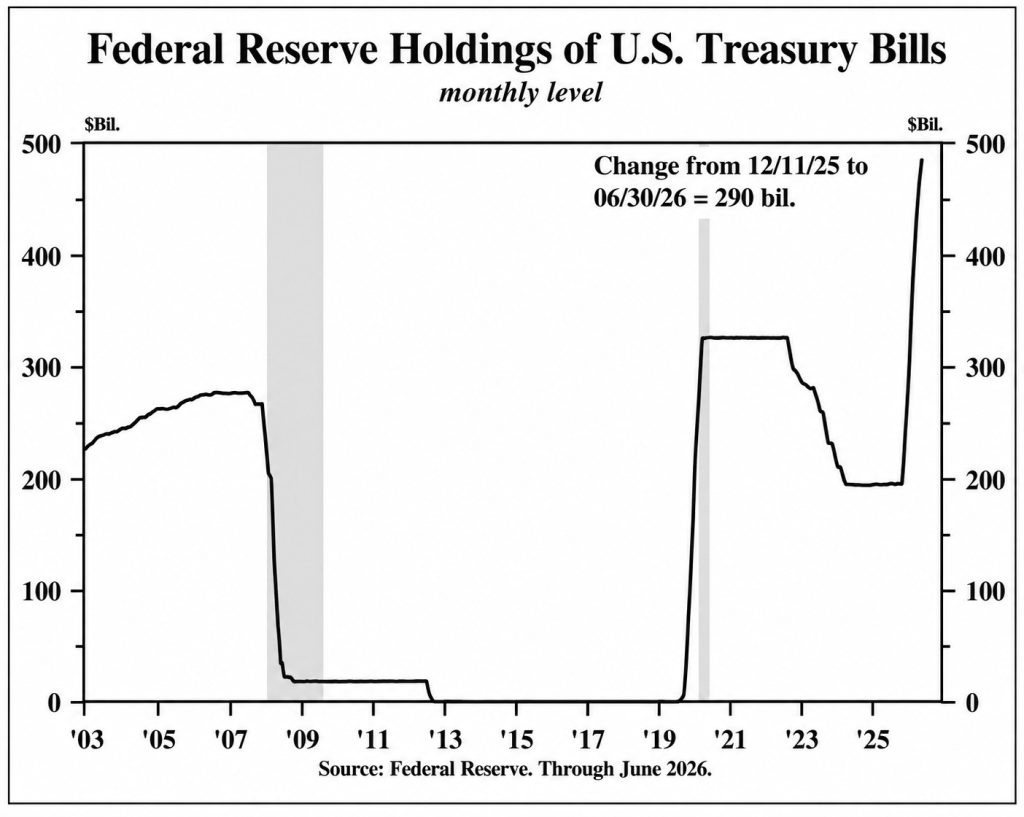
The Federal Reserve has once again been forced to expand its balance sheet and increase its purchases of US Treasuries, effectively financing US government debt, because foreign demand for American sovereign bonds has weakened dramatically.
Over the past year alone, the Federal Reserve has added more than US$300 billion of Treasury securities.
Let there be no misunderstanding about what is driving this.
Global debt dynamics now control the entire monetary ‘narrative’.
Official statements about maintaining higher interest rates, restoring monetary discipline and defeating inflation should be treated with considerable scepticism. Inflation is, at its core, the erosion of a currency’s purchasing power, and the debt burden has now become too large to tolerate genuinely restrictive monetary conditions for any sustained period.
The system requires liquidity.
It requires continued debt monetisation.
And it requires the gradual devaluation of sovereign currencies in order to reduce the real value of the debt outstanding.The rhetoric may remain focused on “fighting inflation.” This is purely a political mis-direction to the detriment of the masses.
The mathematics point in the complete opposite direction.
Rising bond yields are an extremely dangerous macroeconomic development.
Higher interest rates applied to an already unprecedented global debt burden represent one of the greatest threats to the financial system. Governments must not only finance enormous new deficits, but also refinance maturing debt at substantially higher rates than those previously paid.
This creates a deeply destructive compounding effect: higher yields increase debt-servicing costs, which widen fiscal deficits, require even greater debt issuance and ultimately accelerate the growth of the debt burden itself.
The more yields rise, the more debt governments must issue simply to service the debt they already have.
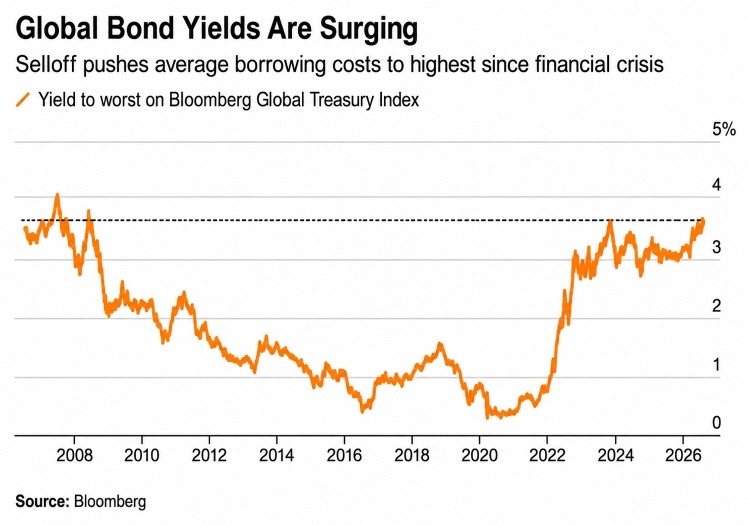
The chart below makes the scale of this problem unmistakably clear. We are at Global Financial Crisis levels again.
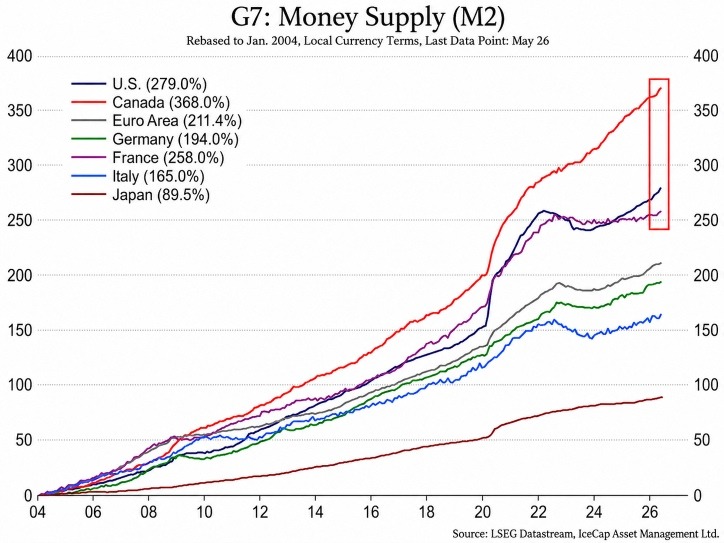
Every major sovereign nation is now expanding its money supply, and the pace of that expansion is accelerating.
Put simply, the further these monetary trends rise, the higher precious metals must ultimately move to reflect the continuing loss of purchasing power in sovereign currencies.
The relationship is not complicated:
More currency creation means greater monetary debasement, and, over time, higher prices for gold, silver and other scarce real assets.
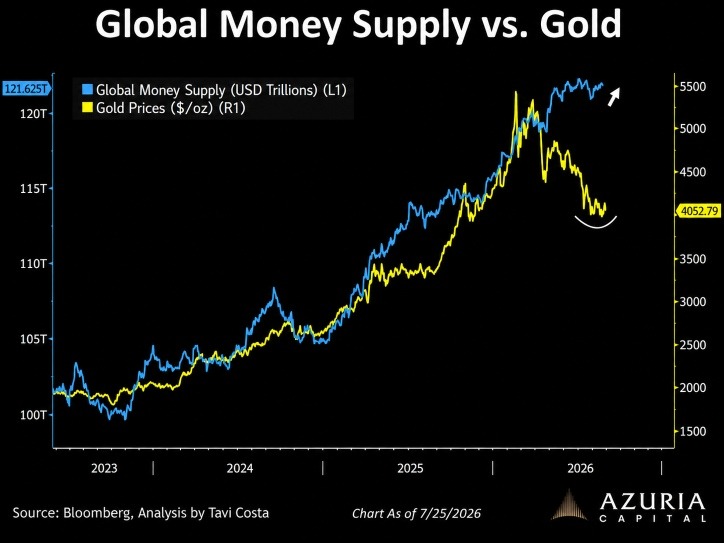
Gold is now looking very cheap, a major gap has to be filled , see chart below….
Goldman Sachs bank reporting of the enormous buying of gold by China coming next Part 6, click here to read.